Introduction: The Seismic Shift in Digital Discovery
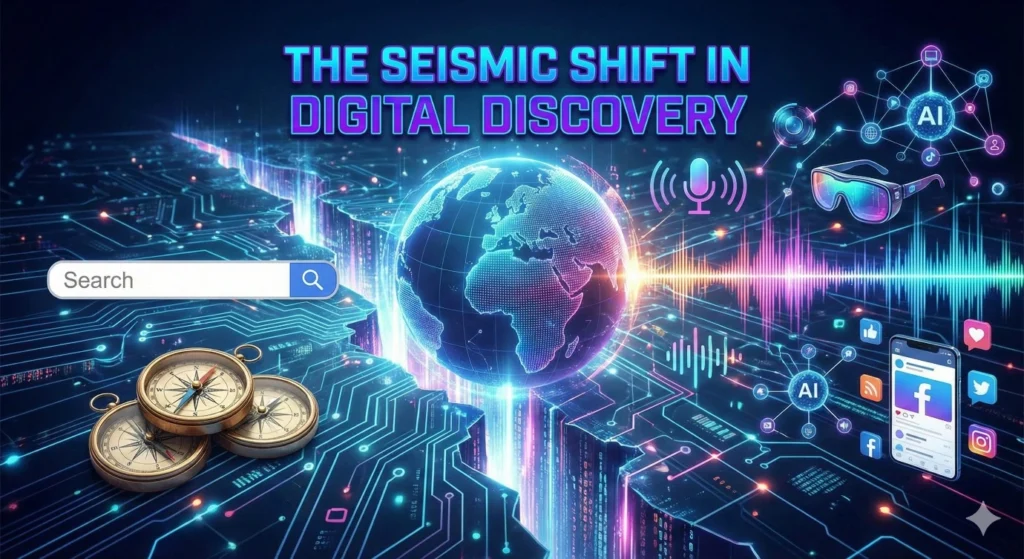
For twenty-five years, the contract between the internet and the user was simple. You typed a query into a box, and the engine gave you ten blue links. You did the work of clicking, reading, and synthesizing the answer. That contract has been broken.
The digital landscape is currently undergoing its most significant transformation since the invention of the search engine itself. We are moving from the era of
Information Retrieval (finding a document) to the era of
Information Synthesis (getting an answer).
At
Ranking Corporation, we have watched this tide turn. The rise of ChatGPT, Claude, Perplexity, and Google’s AI Overviews (formerly SGE) has birthed a new discipline. It is no longer enough to optimize for a search engine’s crawler. You must now optimize for an Artificial Intelligence’s reasoning.
This is the dawn of
Generative Engine Optimization (GEO).
In this definitive guide, we will dismantle what GEO is, how it differs fundamentally from the SEO practices of the last decade, and the specific, data-backed strategies your business must adopt to survive the transition to the “Zero-Click” future.
The Death of the Blue Link and the Rise of the Answer Engine
To understand GEO, we must first understand the machine it serves. Traditional search engines like Google (pre-2023) were essentially librarians. They looked at your library card (keywords) and pointed you to the right shelf (URLs).
Generative Engines are not librarians; they are
research analysts.
When a user asks,
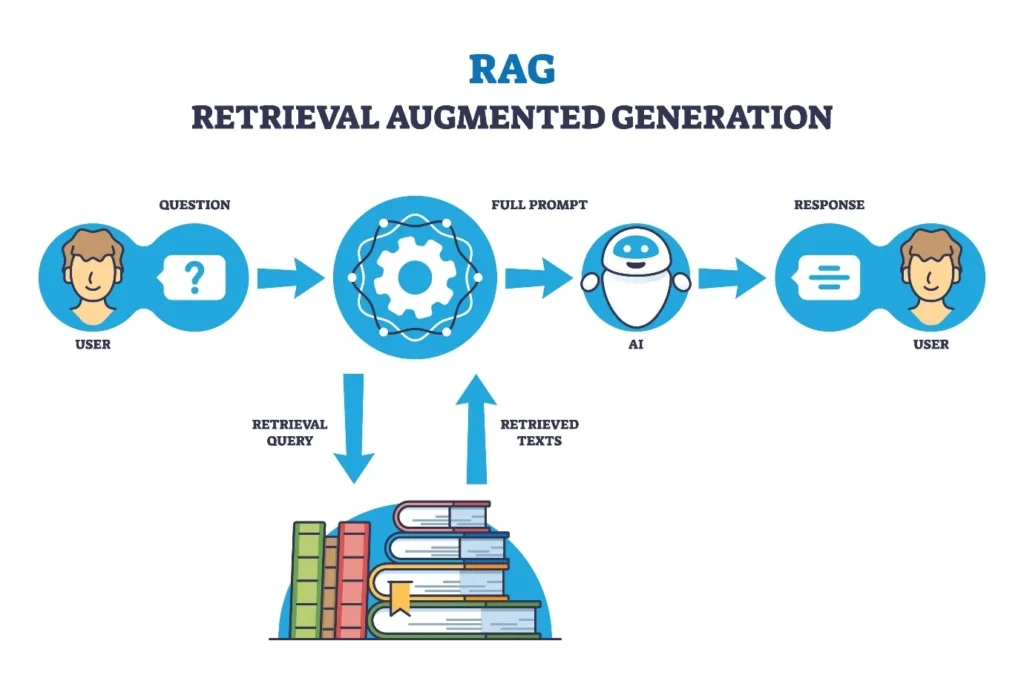
“What is the best CRM for a small dental practice?” a generative engine does not just look for matching keywords. It performs a complex process known as
RAG (Retrieval-Augmented Generation).
- Retrieval: The AI searches its vast index for relevant data points.
- Augmentation: It pulls those specific facts into its “working memory.”
- Generation: It writes a brand-new, unique answer based on the facts it trusts most.
If your content is not structured, authoritative, and “fluent” enough for the AI to understand, you are not just ranked lower—you are invisible. You are excluded from the conversation entirely.
The “Zero-Click” Reality
Gartner predicts that by 2026, traditional search engine volume will drop by
25%, with search marketing losing market share to AI chatbots and other virtual agents. This is the “Zero-Click” phenomenon. Users are getting their answers directly on the results page or inside the chat interface without ever visiting a website.
For businesses, this sounds terrifying. But at
Ranking Corporation, we see it as an evolution of quality. Traffic may go down, but
intent goes up. The users who do click are deeper in the funnel. But to get them, you must be the source the AI cites.
What is Generative Engine Optimization (GEO)?
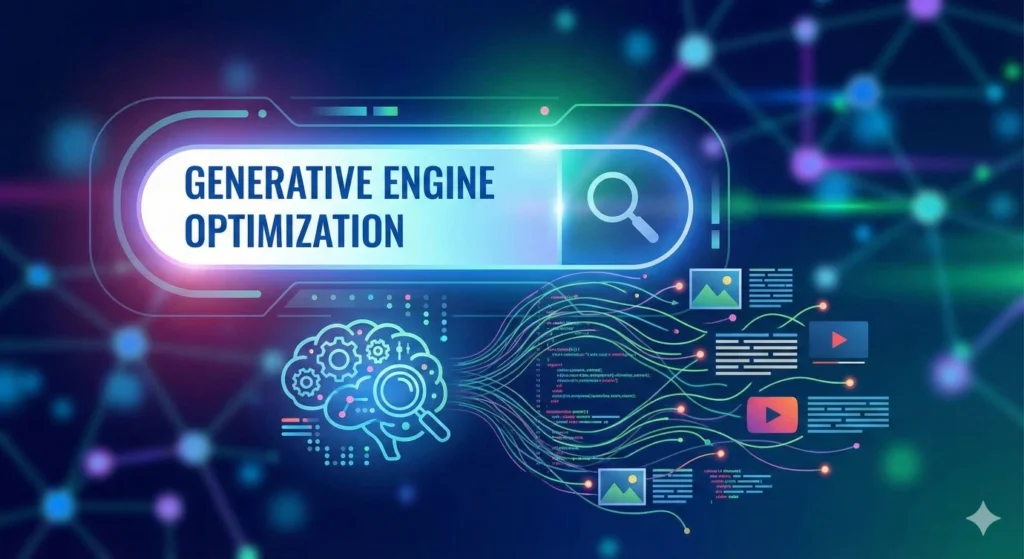
Generative Engine Optimization (GEO) is the strategic process of creating and formatting content to maximize visibility, citation, and inclusion in the outputs of Generative AI engines.
While SEO focuses on convincing a ranking algorithm that your page is popular (backlinks) and relevant (keywords), GEO focuses on convincing a Large Language Model (LLM) that your content is
factual, authoritative, and structurally easy to summarize.
The Princeton Study: The Birth of GEO
The term “GEO” gained academic legitimacy in late 2023 when researchers from Princeton University, Georgia Tech, and the Allen Institute for AI released a landmark paper titled
“GEO: Generative Engine Optimization.”
They analyzed thousands of queries and tested distinct optimization methods to see what made an AI choose one source over another. The results were startling. Traditional SEO tactics like keyword stuffing actually
hurt visibility in AI results. Conversely, specific GEO tactics boosted visibility by up to
40%.
The core finding?
LLMs crave authority and structure. They prioritize content that looks like a credible source—content that uses statistics, citations, and neutral, professional language.
SEO vs. GEO – A Comparative Analysis
Many clients at
Ranking Corporation ask:
“Is SEO dead?” The answer is no, but it is becoming a subset of a larger discipline. SEO is the foundation; GEO is the penthouse.
Here is the technical breakdown of how the two differ:
| Feature |
Traditional SEO |
Generative Engine Optimization (GEO) |
| Primary Goal |
Rank #1 on a SERP (Search Engine Results Page). |
Be the primary cited source in an AI answer. |
| Target Audience |
Human readers scanning for headings. |
LLMs (Machines) parsing for facts and relationships. |
| Success Metric |
Click-Through Rate (CTR), Organic Traffic. |
Share of Model (SoM), Citation Frequency. |
| Content Strategy |
Long-form content, keyword density. |
Concise, fact-heavy, “inverted pyramid” structure. |
| Authority Signal |
Backlinks (Votes from other sites). |
Semantic Authority (Connection to entities) & E-E-A-T. |
| Keywords |
Exact match / Long-tail strings. |
Topic Clusters / Semantic Context / Intent. |
The Shift in Optimization Logic
In SEO, we optimized for the Query.
In GEO, we optimize for the Answer.
If your content contains the answer but hides it behind 2,000 words of fluff, an LLM will likely skip it in favor of a competitor who states the answer clearly in the first paragraph.
The 9 Pillars of GEO Strategy
Based on our extensive testing at
Ranking Corporation and the foundational research in the field, we have identified nine core pillars that drive success in Generative Search.
1. The Citation Advantage
The single most powerful factor in GEO is the presence of citations. The Princeton study revealed that simply adding relevant, high-quality citations to your content can improve your visibility in AI results by significantly higher margins than any other tactic.
- The Tactic: Do not just make claims; back them up. Link to authoritative sources (government bodies, academic journals, primary data) within your content.
- Why it works: LLMs are trained to recognize patterns of validity. A text heavily referenced with external validation mimics the structure of high-quality training data (like Wikipedia or scientific papers), making the AI more likely to trust it.
2. Quotation Inclusion
AI models value human expertise. Including direct quotes from subject matter experts (SMEs) signals to the engine that this content is not just generic AI-slop, but rooted in real-world experience.
- Ranking Corporation Tip: When writing a blog post, interview an internal expert. Use the HTML <blockquotes> tag to make these quotes machine-readable.
3. The “Inverted Pyramid” Structure
Journalists have used this for a century, and now AI demands it.
- Top: The direct answer (The “Who, What, Where”).
- Middle: Supporting details and context.
- Bottom: Niche information and background.
LLMs often have a “context window.” They prioritize information found earlier in the text. If you bury the lead, you bury your chances of being cited.
4. Statistical Density
LLMs hallucinate. To combat this, they are weighted to prefer content that provides concrete data which helps ground their generation.
- Bad: “Most people like this product.”
- GEO Optimized: “74% of users surveyed in 2024 preferred this product, according to [Source].”
5. Fluency and Readability
This is counter-intuitive. You might think “complex” means “smart.” But LLMs prefer
fluency. Complex sentence structures increase the computational “perplexity” (confusion) of the model. Simple, direct, and grammatically perfect sentences are easier for the AI to parse and rephrase.
6. Semantic Entities and Knowledge Graphs
This is the technical backbone of GEO. Search engines no longer see “strings” of text; they see “things” (Entities).
If you are writing about “Apple,” the AI needs to know if you mean the fruit or the tech giant.
- The Strategy: Use Schema Markup (JSON-LD) to explicitly tell the engine what entities are on your page. Connect your brand to other authoritative entities in your niche.
7. Technical Terminology (Used Correctly)
While fluency is key, the correct use of domain-specific jargon establishes authority. If you are writing about medical topics, using the correct Latin terminology or medical coding alongside the layman’s terms signals “Expertise” (the E in E-E-A-T).
8. Multi-Modal Optimization
The future of search is not just text. It is image, video, and audio. Google’s Gemini and OpenAI’s GPT-4o are multimodal. They “see” images.
- The Tactic: Your images must have descriptive, context-rich Alt Text. Your videos need transcripts. If an AI cannot “read” your video, it cannot recommend it as an answer.
9. Brand Authority as an Entity
Ultimately, the AI must trust
you. This is where off-page GEO comes in. The more your brand is mentioned (even without a link) in association with specific topics on forums like Reddit, Quora, and industry publications, the stronger your “Entity Authority” becomes.
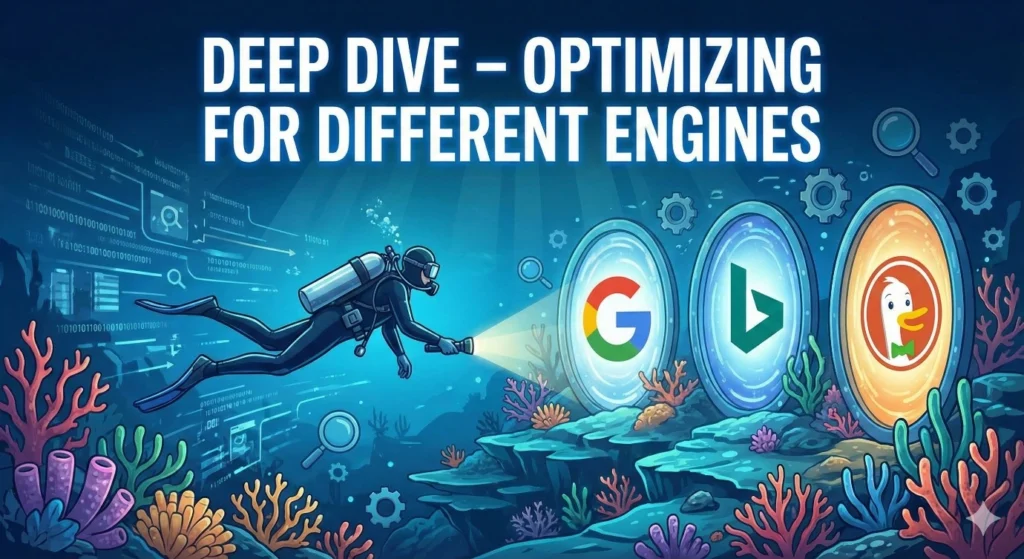
Deep Dive – Optimizing for Different Engines
Not all Generative Engines are the same. At Ranking Corporation, we tailor strategies for specific platforms.
 Optimizing for Google AI Overviews (SGE)
Google is a hybrid. It still cares about traditional SEO signals (PageSpeed, Core Web Vitals, Backlinks) because its AI is built on top of its search index.
- Focus: Heavy Schema Markup, fast load times, and “FAQ” style content that directly answers “People Also Ask” questions.
Optimizing for Perplexity & SearchGPT
These are “Answer Engines” first. They rely heavily on the
freshness of data and citation authority.
- Focus: Date-stamping your content. updating old articles. Perplexity loves recent data. Ensure your citations are from high-authority domains.
Optimizing for LLMs (ChatGPT / Claude direct use)
These models are often trained on data with a cutoff date, but they are increasingly browsing the live web.
- Focus: Brand ubiquity. You want your brand to be part of the training data. This requires a long-term PR strategy where your brand is consistently mentioned in the places where these models scrape data (e.g., major news sites, Wikipedia, high-traffic forums).
The “Dark Funnel” and Measuring Success
The scariest part of GEO for marketing directors is the loss of metrics. If a user reads the answer on Google and never clicks your website, how do you measure ROI?
We are entering the era of the
“AI Dark Funnel.”
New Metrics for a New Era
Ranking Corporation advises moving away from pure “Traffic” and “Rankings” toward these GEO-centric metrics:
- Share of Model (SoM): How often is your brand mentioned when an AI is asked about your industry? (e.g., Prompt: “What are the top 5 enterprise SEO agencies?” -> Do you appear?)
- Citation Frequency: Tracking how often your URL is cited in AI Overviews.
- Sentiment Analysis: When the AI mentions you, is it positive? AI acts as a reputation aggregator.
- Zero-Click Conversions: A rise in direct traffic or branded search volume often correlates with high visibility in AI answers. Users see you in the AI answer, remember the name, and type it in directly later.
$$GEO\ Value = \frac{Visibility \times Authority \times Sentiment}{Competition}$$
Why Ranking Corporation is Your GEO Partner
The transition to Generative Engine Optimization is not a “tweak.” It is a fundamental restructuring of how your business communicates with the digital world.
Many agencies are still selling 2015 SEO tactics—buying cheap backlinks and stuffing keywords. That is a recipe for obsolescence in 2025.
Ranking Corporation is different.
- We Data-Mine the AI: We use proprietary scripts to query LLMs thousands of times, identifying exactly why your competitors are being cited and you aren’t.
- Entity-First Approach: We don’t just build links; we build your Brand Entity in the Knowledge Graph.
- Future-Proof Content: We create content that serves the user and the machine, utilizing the “Inverted Pyramid” and citation-dense strategies that LLMs prefer.
The Window of Opportunity
Right now, GEO is in its “Wild West” phase. Most brands are ignoring it. This creates a massive opportunity for early adopters to solidify their place as the “Source of Truth” in their industry before the competition catches up.
Being the first source the AI trusts is a moat that is incredibly difficult to cross. Once an LLM decides you are the authority on “Cloud Computing” or “Vegan Leather,” that bias is baked into its answers for millions of users.
Conclusion: Adapt or Disappear
The “Ten Blue Links” are fading. The future is conversational, synthesized, and immediate.
Generative Engine Optimization is not just about getting traffic; it is about brand survival. It is about ensuring that when the world asks Artificial Intelligence for answers, your business is part of the solution. The algorithms have changed. The rules have changed. The game has changed. Are you ready to start Ranking in the new world?
Would you like Ranking Corporation to perform a preliminary “GEO Audit” on your brand to see how AI currently perceives your business?