Is Your Website Healthy?
Imagine owning a high-performance sports car but never taking it in for a tune-up. Eventually, the engine sputters, the tires wear out, and what used to be a speed machine becomes a liability. Your website is no different. In the fast-paced digital highway of search engine algorithms, your website is your vehicle. Without regular maintenance, it will lose momentum.

In the world of digital marketing, this “tune-up” is called an
SEO Audit.
At
Ranking Corporation, we believe that data drives decisions. An SEO audit is not merely a checklist of errors; it is a strategic roadmap that reveals where you are losing revenue, where your competitors are outsmarting you, and how you can reclaim your position at the top of the Search Engine Results Pages (SERPs).
Whether you have noticed a sudden drop in organic traffic, are planning a site migration, or simply want to improve your current standing, this comprehensive guide will walk you through the exact process we use to audit enterprise-level websites.
This is not a 10-minute skim. This is a deep dive into the mechanics of search visibility.
Phase 1: The Audit Toolkit
Preparation is Key
Before you can diagnose the problem, you need the right instruments. You cannot perform a professional audit with the naked eye. At
Ranking Corporation, we utilize a stack of industry-leading tools. For this guide, you should have access to the following:
- Google Search Console (GSC): The source of truth. It tells you exactly how Google sees your site.
- Google Analytics 4 (GA4): To analyze user behavior, traffic sources, and conversion data.
- A Crawler: Tools like Screaming Frog SEO Spider or Lumar (formerly DeepCrawl). These mimic search engine bots to crawl your site and find technical errors.
- A Backlink Checker: Tools like Ahrefs, SEMrush, or Moz.
- Page Speed Tools: Google PageSpeed Insights and GTmetrix.
The Pre-Audit Mindset: Before starting the crawl, define your goals. Are you auditing for a specific penalty recovery? Are you auditing for growth? Knowing the “Why” will help you prioritize the “What.”
Phase 2: Technical SEO Audit
The Foundation of Your Digital Presence
Technical SEO is the skeleton of your website. If the structure is weak, the content (the muscle) cannot do its job. A technical audit ensures that search engines can crawl, index, and understand your website without hindrance.
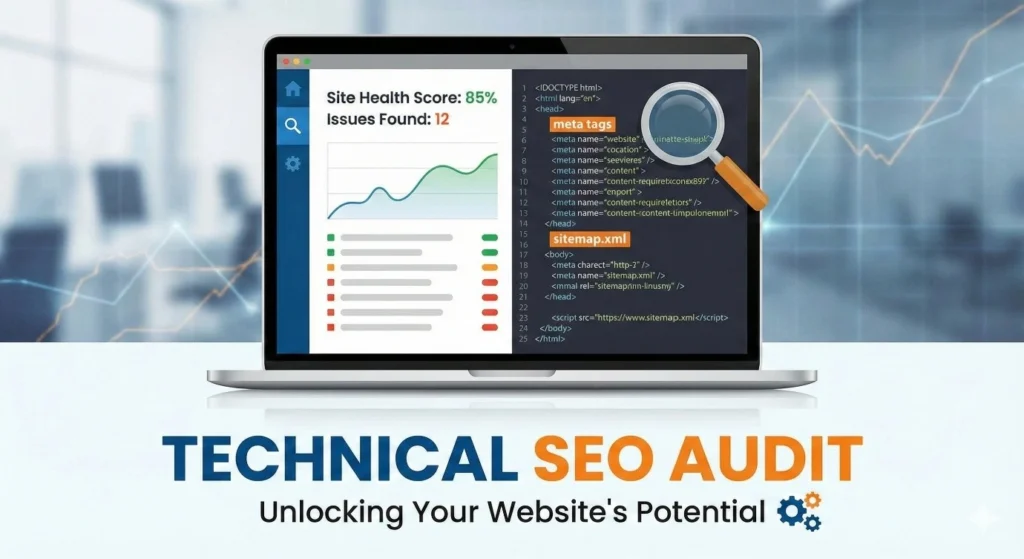 1. Crawlability and Indexability
If Google can’t find your page, it can’t rank your page. Period.
- Robots.txt Analysis: Check your robots.txt file. Is it accidentally blocking important resources? We have seen instances where a simple Disallow: / command de-indexed an entire site. Ensure your JS and CSS files are crawlable.
- XML Sitemap Status: specific Check GSC. Is your sitemap submitted? When was it last read? Does the number of URLs in the sitemap match the number of indexed pages? If you have 5,000 pages in your sitemap but only 2,000 indexed, you have a “crawl budget” or quality issue.
- The “Noindex” Tag: Use your crawler to identify pages tagged with noindex. Ensure these are actually pages you want hidden (like Thank You pages or Admin logins) and not valuable content pages.
2. Status Code Analysis
Your crawler will return HTTP status codes for every URL. Here is how Ranking Corporation analyzes them:
- 200 OK: The goal. The page loaded successfully.
- 301 Redirects: These are permanent redirects. While necessary, check for “Redirect Chains” (Page A -> Page B -> Page C). Chains waste crawl budget and dilute “link juice.” Flatten them so Page A redirects directly to Page C.
- 302 Redirects: Temporary redirects. Ensure these shouldn’t be 301s. 302s do not pass full link equity.
- 404 Errors: Broken links. These provide a terrible user experience. You must either restore the page, 301 redirect it to a relevant alternative, or let it 410 (permanently deleted) if it has no value and no backlinks.
- 5xx Errors: Server errors. These are critical. If Google encounters 500 errors frequently, it will slow down its crawling rate significantly to avoid crashing your server.
3. Canonicalization
Duplicate content is a silent killer. Canonical tags tell Google: “This is the master version of the page.”
- Self-Referencing Canonicals: Every page should ideally point to itself unless it is a duplicate.
- Parameter URLs: E-commerce sites often generate URLs like domain.com/product?color=red. Ensure these canonicalize back to the main product page to prevent keyword cannibalization.
4. Site Architecture and URL Structure
- Flat vs. Deep: At Ranking Corporation, we advocate for a relatively flat architecture. Important pages should be no more than 3 clicks away from the homepage.
- URL Hygiene: Are your URLs human-readable?
- Bad: domain.com/p=12355
- Good: domain.com/services/seo-audit
- Avoid underscores (use hyphens), capital letters, and excessive length.
5. HTTPS and Security
In 2014, Google confirmed HTTPS as a ranking signal. Today, it is non-negotiable.
- Check for “Mixed Content” issues (where an HTTPS page loads HTTP images or scripts). This triggers security warnings in browsers and erodes trust.
Phase 3: Core Web Vitals & Page Experience
Speed is the New Currency
Google’s “Page Experience” update made Core Web Vitals a ranking factor. This moves the audit from “Can Google read it?” to “Does the user enjoy it?”
1. The Three Pillars of CWV
You must analyze these metrics using Google PageSpeed Insights or the “Core Web Vitals” report in GSC.
- Largest Contentful Paint (LCP): Measures loading performance. How fast does the main content load?
- Target: Under 2.5 seconds.
- Fixes: Upgrade hosting, implement caching, use a CDN (Content Delivery Network), and optimize images.
- First Input Delay (FID) / Interaction to Next Paint (INP): Measures interactivity. How fast does the browser respond when a user clicks a button?
- Target: Under 200 milliseconds.
- Fixes: Minimize JavaScript execution and break up long tasks.
- Cumulative Layout Shift (CLS): Measures visual stability. Does the content jump around as it loads?
- Target: Less than 0.1.
- Fixes: Set explicit width and height attributes for images and video; reserve space for ads.
2. Mobile-First Indexing
Google predominantly uses the mobile version of the content for indexing and ranking.
- Responsive Design: Does the text scale? are buttons clickable with a thumb?
- Hidden Content: In the past, content hidden behind “read more” tabs on mobile was devalued. Now, it is generally accepted, but visible content is still preferred.
- Mobile Speed: Test your site on a 4G connection simulation, not just your fast office WiFi.
Phase 4: On-Page SEO Audit
Content is King, but Context is Queen
Once the technical foundation is solid, Ranking Corporation moves to the content.
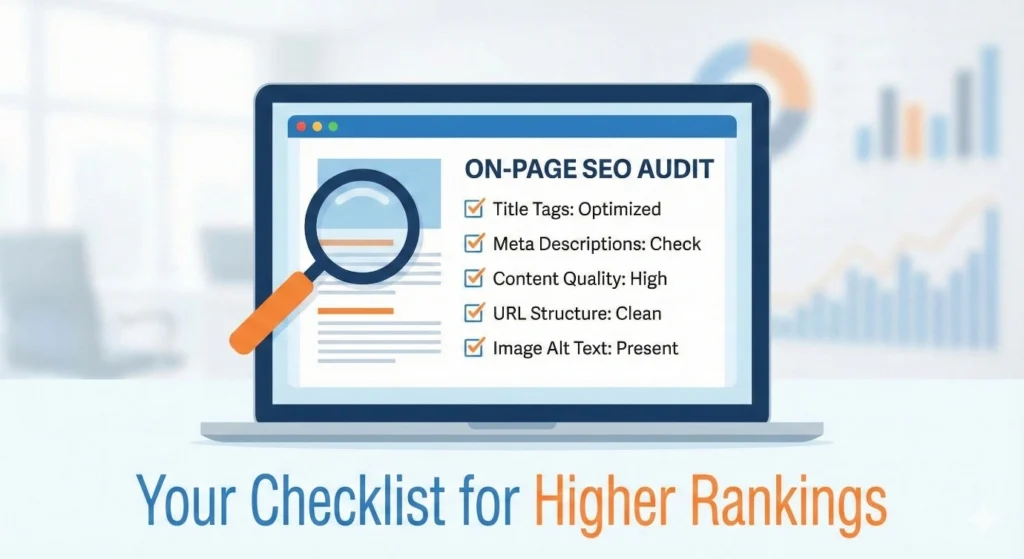
On-page SEO is about relevance
.
1. Keyword Targeting and Cannibalization
- Primary Keyword Check: Does every core page target a unique primary keyword?
- Cannibalization: This occurs when two pages on your site compete for the same keyword. Google gets confused about which one to rank, often ranking neither.
- Audit Action: Search specific queries in GSC. If multiple pages are getting impressions for the exact same query, you have a cannibalization issue. You may need to merge these pages or differentiate their intent.
2. Title Tags and Meta Descriptions
These are your “ad copy” in the search results.
- Title Tags: Are they under 60 characters? Do they include the primary keyword near the front? Are they unique for every page?
- Meta Descriptions: While not a direct ranking factor, they impact Click-Through Rate (CTR). Are they compelling? Do they include a call to action?
- Missing Metadata: Use Screaming Frog to find pages with missing titles or descriptions and fill the gaps.
3. Header Tags (H1-H6)
- The H1 Rule: Each page should have exactly one H1 tag, and it should describe the main topic of the page.
- Hierarchy: H2s should support the H1, and H3s should support the H2s. Do not skip levels (e.g., jumping from H1 to H4) merely for styling purposes. Use CSS for styling; use Headers for structure.
4. Image Optimization
Images are often the heaviest assets on a page.
- Alt Text: Is every image tagged with descriptive Alt Text? This is crucial for accessibility (screen readers) and helps Google Image search understand the context.
- File Size: Are you serving 2MB images where a 50KB image would suffice?
- Next-Gen Formats: Are you using WebP or AVIF formats instead of heavy JPEGs or PNGs?
5. Internal Linking Structure
Internal links distribute authority (PageRank) throughout your site.
- Orphan Pages: These are pages with zero internal links pointing to them. Google struggles to find them, and users will never see them.
- Anchor Text: Is the anchor text descriptive? Avoid “Click Here.” Use “View our SEO Services.”
- Depth: Ensure your high-value pages (money pages) receive the most internal links.
Phase 5: Content Quality & E-E-A-T
The Human Element
Google’s algorithms are increasingly sophisticated at detecting quality. The “Helpful Content Update” rewards content written for humans, not search engines.
1. E-E-A-T Audit
E-E-A-T stands for Experience, Expertise, Authoritativeness, and Trustworthiness.
- Authorship: Do your blog posts have author bios? Is the author a recognized expert?
- About Us: Does your About page clearly state who runs the company and provide physical contact details?
- Citations: For YMYL (Your Money Your Life) topics—finance, health, law—do you cite credible external sources?
2. Content Gap Analysis
What are your competitors writing about that you aren’t?
- Use tools like Ahrefs/SEMrush to perform a “Content Gap” analysis.
- Identify keywords your competitors rank for, but you do not.
- Create a content calendar to fill these gaps.
3. Thin and Duplicate Content
- Thin Content: Pages with very little text (under 300 words) often provide little value.
- Decision: Bulk them up, merge them with other pages, or remove them.
- Duplicate Content: Apart from technical duplicates, do you have multiple blog posts saying the exact same thing? Consolidate them into one “Ultimate Guide.”
Phase 6: Off-Page SEO Audit
Your Reputation in the Wild
Off-page SEO refers to actions taken outside of your own website, primarily backlinks. Backlinks are votes of confidence.
1. Backlink Profile Health
- Total Referring Domains: How many unique websites link to you? (This is more important than the total number of links).
- Link Velocity: Are you gaining links steadily? A sudden spike can look manipulative; a sudden drop indicates lost press or broken content.
2. Toxic Backlink Analysis
Not all links are good links.
- Spam: Look for links from gambling sites, adult sites, or “link farms” (directories with no real content).
- Anchor Text Manipulation: If 90% of your backlinks use the exact match anchor text “Best SEO Agency,” you are at risk of a Penguin penalty. The profile should look natural (brand name, URL, “website,” etc.).
- Disavow File: If you find a high volume of spammy links that you cannot get removed manually, compile a Disavow File to submit to Google, telling them to ignore these specific links. Note: Use this with extreme caution.
3. Competitor Link Intersect
- Identify sites that link to two or more of your competitors but not to you. These are high-probability link-building targets because they clearly reference businesses in your niche.
Phase 7: Local SEO
Dominating the Neighborhood
For businesses with a physical presence,
Local SEO is a distinct beast.
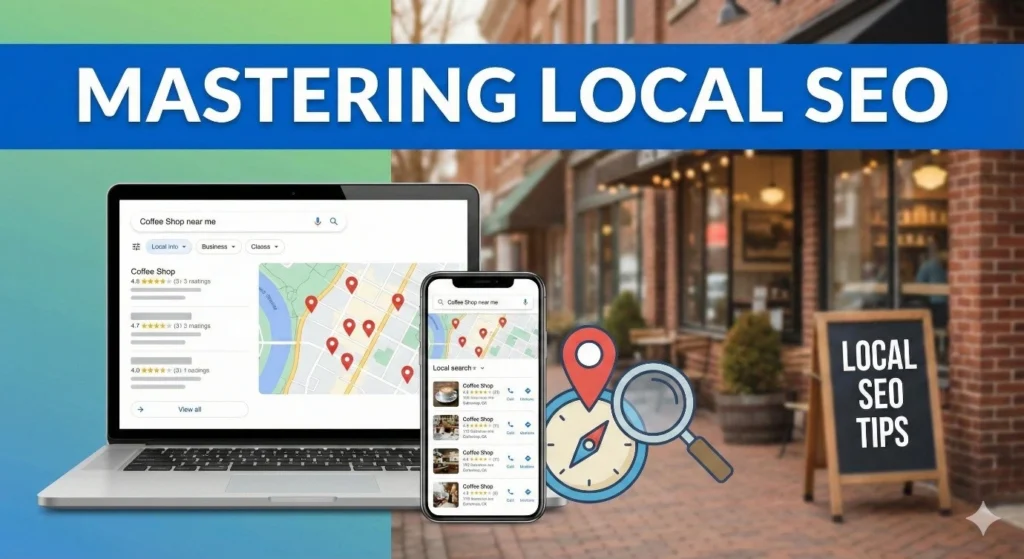
- Google Business Profile (GBP): Is it claimed and verified? Are the hours accurate? Are you posting regular updates?
- NAP Consistency: Name, Address, Phone Number. This data must be identical across your website, GBP, Yelp, Yellow Pages, and social media. Even a difference like “St.” vs “Street” can sometimes cause data discrepancies.
- Local Keywords: Are you targeting “SEO Services [City Name]” within your content?
Phase 8: Reporting and The Action Plan
Turning Data into Strategy
You have crawled, analyzed, and diagnosed. Now you have a massive spreadsheet of data. This is where most audits fail—they provide problems without solutions.
At
Ranking Corporation, we categorize issues into a prioritization matrix:
1. The Priority Matrix
- Critical (Fix Immediately):
- Site is de-indexed via robots.txt.
- Homepage returns a 404 or 500 error.
- Malware detected.
- Manual Penalty in GSC.
- High Priority (Fix within 2 weeks):
- Broken links on high-traffic pages.
- Slow server response time.
- Duplicate Title Tags on main service pages.
- Mobile usability errors.
- Medium Priority (Fix within 1 month):
- Thin content on blog posts.
- Missing Alt Text.
- Long chains of redirects.
- Optimizing meta descriptions for CTR.
- Low Priority (Ongoing Maintenance):
- Updating old content.
- Minor HTML validation errors.
- Tweaking URL structures for future pages.
2. Setting Benchmarks
Record your current metrics
before implementing changes:
- Organic Traffic (Monthly).
- Keyword Rankings for top 20 terms.
- Domain Authority (DA/DR).
- Conversion Rate.
This allows you to prove ROI (Return on Investment) three to six months down the line.
Conclusion: SEO is a Marathon, Not a Sprint
A complete SEO audit is an intensive process. It requires technical acumen, analytical thinking, and a deep understanding of how users interact with content. But the rewards are undeniable. A clean, fast, and optimized website is the foundation of digital revenue.
If you have followed this guide, you now have a comprehensive list of action items to improve your website’s health. However, executing these fixes—especially the complex technical ones—can be daunting.
Why go it alone?
At
Ranking Corporation, we don’t just find the problems; we fix them. We specialize in turning audits into action plans that drive tangible growth. Whether you need a one-time deep-dive audit or ongoing SEO management, our team of experts is ready to lift the hood of your website and fine-tune it for peak performance.
Don’t let technical errors cost you customers.
Appendix: The Ranking Corporation Quick-Audit Checklist
- GSC Checked: No manual actions, sitemap submitted.
- Robots.txt: Verified allowing access.
- Speed Test: LCP under 2.5s.
- Mobile: Visual check on iOS and Android.
- Architecture: No orphan pages; flat structure.
- Content: Checked for duplicates and cannibalization.
- Metadata: Titles and descriptions unique.
- Links: Broken links fixed; toxic links disavowed.
Glossary of Terms
- Anchor Text: The clickable text in a hyperlink.
- Bounce Rate: The percentage of visitors who navigate away from the site after viewing only one page.
- Canonical Tag: An HTML element that helps webmasters prevent duplicate content issues.
- Crawl Budget: The number of pages Googlebot crawls and indexes on a website within a given timeframe.
- SERP: Search Engine Results Page.
- Schema Markup: Code (semantic vocabulary) that you put on your website to help the search engines return more informative results for users.