



The hospitality industry in 2026 is more competitive, data-driven, and digitally influenced than ever before. Travelers no longer rely solely on travel agents or generic booking platforms. Instead, they search, compare, evaluate, and book directly from their smartphones. From “boutique hotel near me” to “luxury hotel in South Mumbai with sea view,” buying intent begins on search engines.
For hoteliers, this shift represents both a challenge and an extraordinary opportunity. The challenge lies in competing not just with neighboring hotels, but with Online Travel Agencies (OTAs), review platforms, and aggregator websites. The opportunity lies in leveraging Local SEO to capture high-intent search traffic and convert it into direct bookings—without paying recurring commissions.
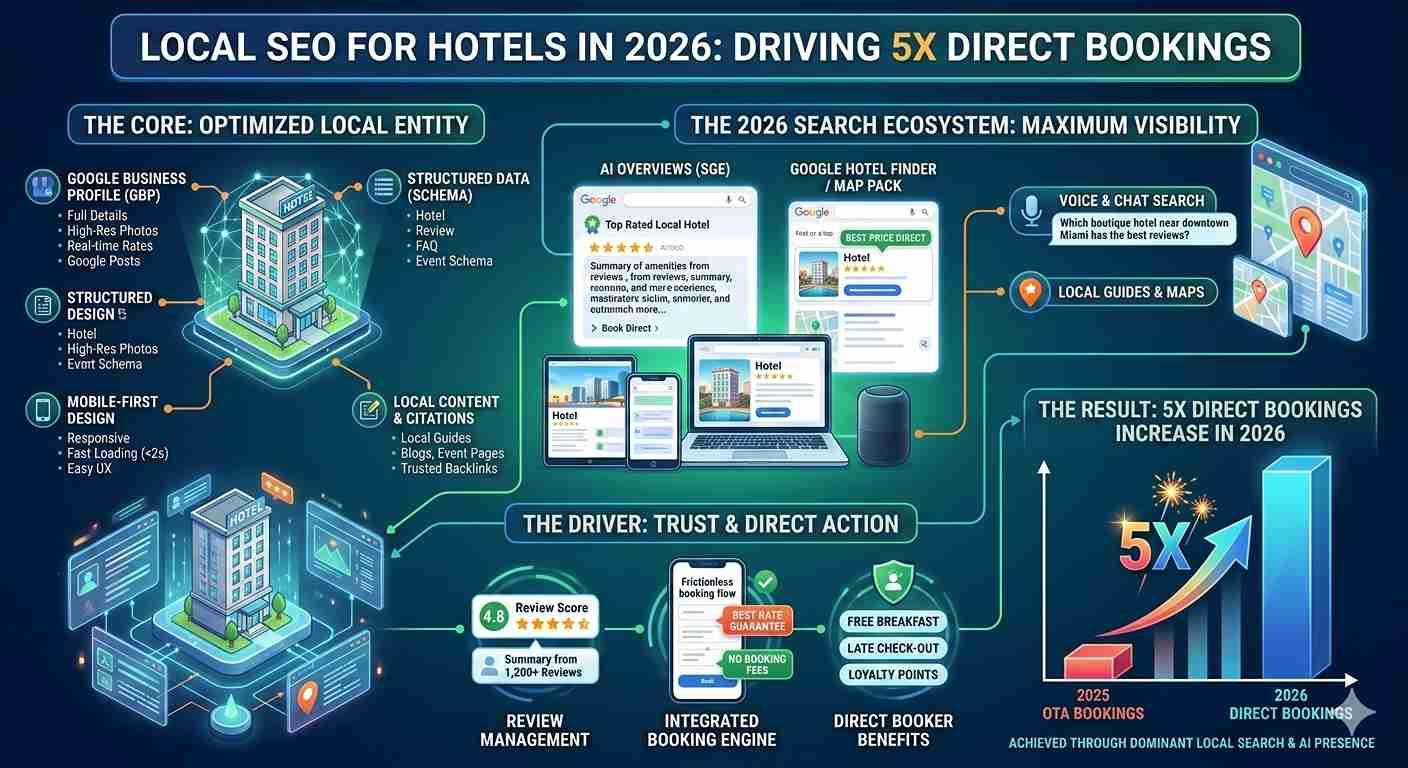
This is precisely where Ranking Corporation has helped hotel brands transform their digital presence. By implementing strategic Hotel SEO services, advanced geo-targeting techniques, and tailored Local SEO services for hotels, properties are witnessing up to 5X growth in direct bookings in 2026.
Let’s explore how Local SEO has become the most powerful revenue driver for hotels; and how you can leverage it to dominate your local market.
The Evolution of Hotel Search Behavior in 2026

Travelers today are hyper-local in their search patterns. Even international travelers search with geographic modifiers. Queries such as:
“5-star hotel near Delhi airport”
“Luxury beach resort in Goa”
“Business hotel in Downtown Chicago”
“Pet-friendly hotel near Central Park”
These are not casual searches. They reflect transactional intent. The user is not browsing; they are evaluating and preparing to book.
Search engines prioritize relevance, proximity, and authority. This is why Local SEO has become critical. If your hotel is not optimized for local search signals, Google’s algorithm will favor competitors with stronger localized optimization, structured data, reviews, and proximity signals.
In 2026, local search results are dominated by:
Google Business Profile optimization
Local pack visibility
Geo-optimized landing pages
Structured data for hotels
High-quality reviews and ratings
Mobile-first performance
Hotels that master these components consistently outperform competitors in direct reservations.
Why Direct Bookings Matter More Than Ever
Every hotelier understands the commission model of OTAs. Platforms such as Booking.com and Expedia often charge commissions ranging from 15% to 30% per booking. While these platforms offer visibility, they significantly reduce profit margins.
In 2026, profit optimization is not about increasing occupancy alone; it is about improving revenue per booking. Direct reservations:
Eliminate commission fees
Strengthen brand loyalty
Enable upselling opportunities
Provide access to first-party customer data
Improve lifetime customer value
When hotels invest in Local SEO services for hotels, they attract guests who are already searching for specific properties or locations, making the conversion rate substantially higher than generic traffic.
Hotels partnering with Ranking Corporation have reported up to 5X growth in direct bookings after shifting focus from OTA dependency to search-driven acquisition.
Understanding Local SEO for Hotels

Local SEO for hotels is the process of optimizing your online presence so that your property appears prominently in local search results, map listings, and geographically targeted queries.
Unlike traditional SEO, which focuses broadly on ranking for industry keywords, local SEO emphasizes:
Geographic relevance
Location-specific content
Google Business Profile optimization
NAP consistency (Name, Address, Phone)
Review acquisition and management
Local backlinks
Schema markup for hospitality businesses
For hotels, this approach aligns perfectly with traveler behavior. Most hotel searches include a city, landmark, neighborhood, or “near me” modifier.
By optimizing for local intent, hotels capture guests at the exact moment they are ready to book.
The Role of Google Business Profile in Driving 5X Bookings
In 2026, Google Business Profile is not optional; it is foundational.
When a traveler searches for “luxury hotel in Jaipur,” the local pack appears before organic listings. The hotels displayed here receive the majority of clicks and calls.
An optimized Google Business Profile includes:
Accurate business categories
High-resolution images
Room photos and amenities
Updated pricing
FAQs
Booking links
Review responses
Seasonal posts
Hotels that treat their profile as a dynamic sales asset; rather than a static listing—outperform competitors dramatically.
Ranking Corporation integrates strategic keyword placement, structured data alignment, and review optimization within Google Business Profiles to maximize visibility and conversion rates.
Geo-Targeted Landing Pages That Convert
Generic “Rooms” or “About Us” pages are insufficient in 2026. Hotels need location-specific landing pages that capture micro-intent.
For example:
Hotel near Mumbai Airport
Hotel near Taj Mahal
Luxury hotel near Times Square
Conference hotel in Central London
Each of these represents a unique search opportunity.
By building geo-optimized landing pages enriched with local schema markup, internal linking, and high-intent keywords, hotels can dominate niche local searches.
This approach has proven especially effective for SEO for luxury hotels, where high-net-worth travelers often search for specific neighborhoods or landmarks.
The Power of Reviews in Local Rankings

In 2026, review signals are stronger than ever in local ranking algorithms. Search engines assess:
Review volume
Review recency
Sentiment analysis
Keyword relevance within reviews
Response consistency
Encouraging guests to leave authentic reviews directly impacts search visibility.
Positive review keywords such as “best luxury stay in Udaipur” or “excellent beachfront hotel in Goa” reinforce local keyword signals organically.
Professional Hotel SEO services now include reputation strategy frameworks to systematically increase review acquisition while maintaining brand credibility.
Mobile Optimization and Core Web Vitals
Over 70% of hotel searches in 2026 originate from mobile devices. Page speed, user experience, and mobile usability directly influence ranking and conversion.
If your booking engine is slow, poorly integrated, or non-responsive, you lose guests instantly.
Google’s Core Web Vitals prioritize:
Largest Contentful Paint (LCP)
First Input Delay (FID)
Cumulative Layout Shift (CLS)
Hotels investing in technical optimization see dramatic increases in booking completion rates.
Structured Data & Schema for Hospitality
Structured data helps search engines understand hotel-specific details such as:
Star rating
Room availability
Pricing
Amenities
Reviews
Location coordinates
Schema markup enhances rich snippets, improving click-through rates significantly.
For SEO for luxury hotels, implementing detailed structured data increases perceived authority and visibility in competitive markets.
Local Backlink Authority
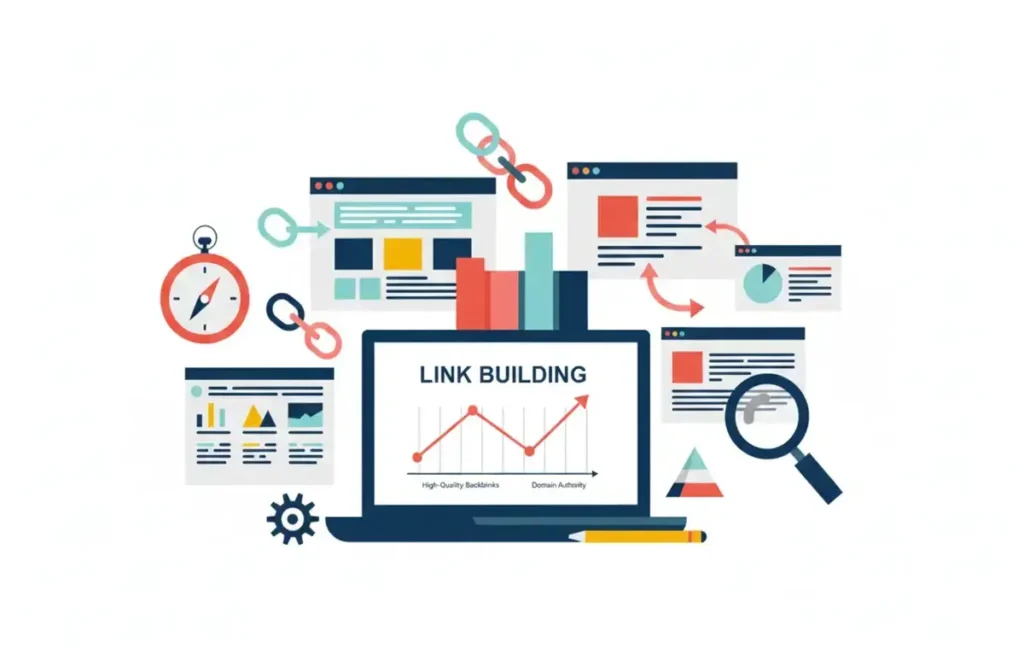
Backlinks remain a dominant ranking factor in 2026. However, quality outweighs quantity.
Hotels benefit from:
Local tourism board links
Event sponsorship mentions
Local news coverage
Travel blogger collaborations
Wedding and conference venue partnerships
Ranking Corporation focuses on acquiring geographically relevant backlinks that strengthen local authority.
Voice Search Optimization in 2026
Voice searches such as “Hey Google, find a 5-star hotel near me with a spa” are increasingly common.
Voice queries are conversational and long-tail. Hotels optimizing for natural language patterns gain a significant advantage.
FAQ sections, structured content, and semantic keyword optimization enhance visibility in voice-driven results.
Conversion-Focused Content Strategy

Traffic without conversion is meaningless. High-performing hotel websites include:
Clear CTAs
Seamless booking engines
Urgency triggers
Seasonal offers
Local event integration
Personalized landing experiences
Combining Local SEO visibility with CRO (Conversion Rate Optimization) multiplies direct bookings exponentially.
Luxury Hotels: A Specialized SEO Approach
The strategy for budget hotels differs significantly from SEO for luxury hotels.
Luxury travelers search differently. They prioritize:
Experience-driven keywords
Exclusive amenities
Spa, fine dining, concierge services
Destination weddings
Premium suites
SEO campaigns must reflect aspirational branding while maintaining strong technical optimization.
Why 2026 Is the Breakthrough Year for Local SEO
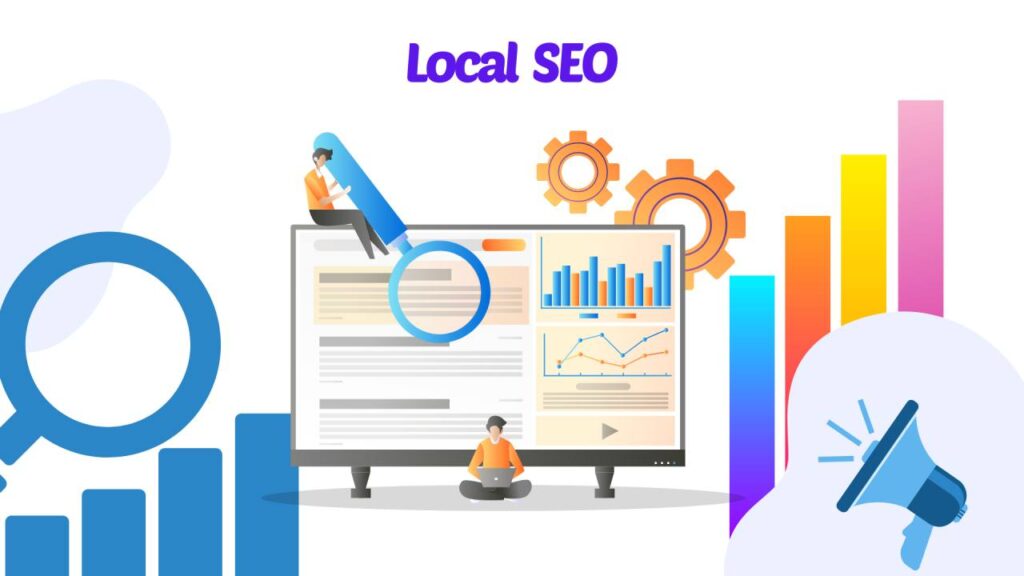
Search engine algorithms now prioritize:
User intent
Proximity relevance
Experience signals
Engagement metrics
Brand authority
Hotels that invest in Hotel SEO services early secure compounding advantages.
As competition increases, late adopters will struggle to capture high-intent local traffic.
Building a Sustainable Direct Booking Ecosystem
Local SEO is not a one-time tactic. It is an ongoing ecosystem that integrates:
Content marketing
Technical SEO
Reputation management
Analytics tracking
Conversion optimization
Geo-expansion strategies
When executed cohesively, the impact multiplies over time.
The Financial Impact of 5X Direct Bookings
Consider a 100-room hotel with an average daily rate of $200 and 70% occupancy. Even a modest increase in direct booking share can translate into hundreds of thousands of dollars saved annually in commissions.
A 5X increase in direct bookings dramatically shifts revenue margins, enabling reinvestment into guest experience and brand growth.
Partnering with Experts for Measurable Results

Executing high-level local SEO requires technical expertise, strategic planning, and continuous optimization.
Ranking Corporation specializes in delivering performance-driven Hotel SEO services designed specifically for hospitality brands. By combining advanced analytics, geo-targeted keyword research, and tailored Local SEO services for hotels, the company enables hotels to dominate their local markets in 2026.
The Future of Hotel Marketing Is Local
In 2026, the hospitality landscape belongs to hotels that control their digital visibility. Local SEO is not just about rankings; it is about ownership. Ownership of traffic. Ownership of customer relationships. Ownership of revenue. Hotels that implement advanced local search strategies are seeing unprecedented growth in direct bookings.
The message is clear: If your hotel is not optimized for local search, your competitors are capturing your guests. If you want to achieve 5X direct bookings, reduce OTA dependency, and build long-term brand equity, investing in strategic SEO for luxury hotels, advanced Hotel SEO services, and comprehensive Local SEO services for hotels is no longer optional; it is essential. The future of hospitality marketing is local. And those who embrace it now will dominate tomorrow.